Introduction to ESG Reporting
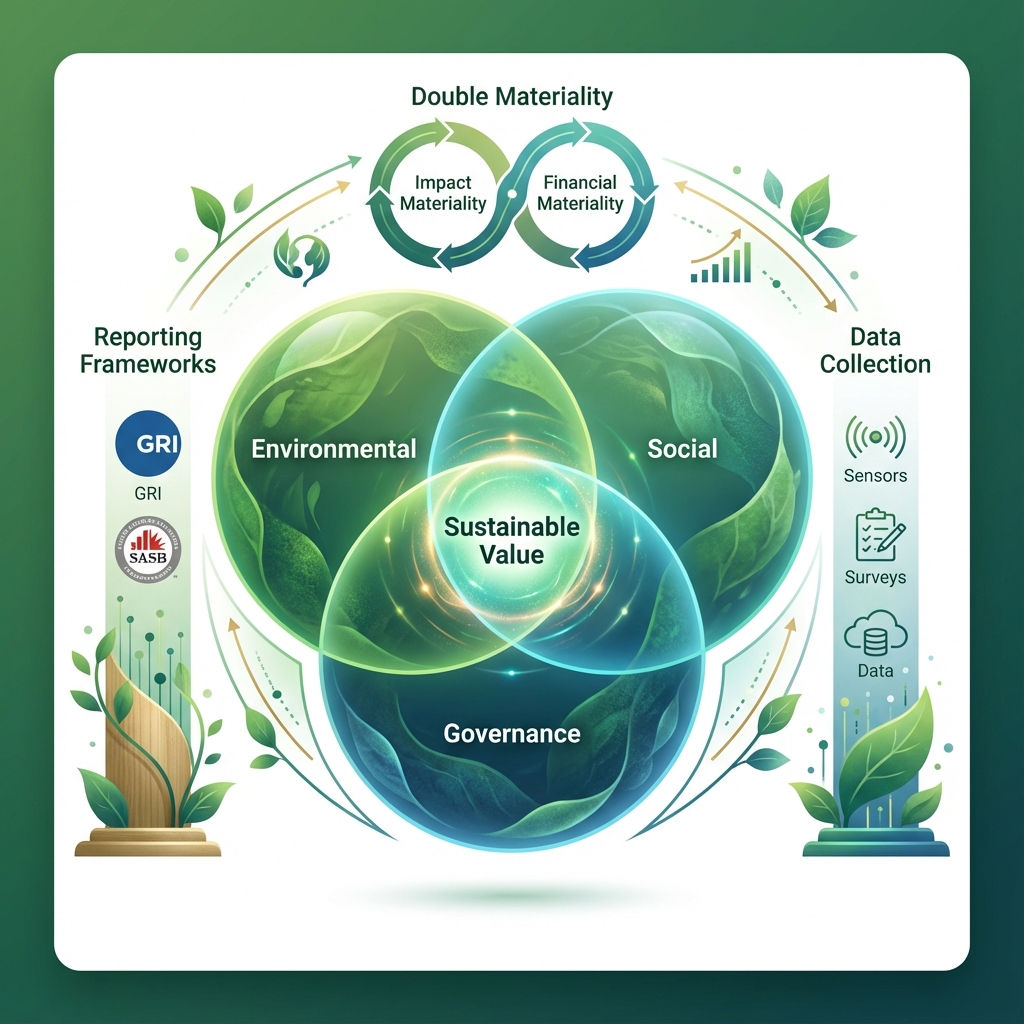
Concept: Environmental, Social, and Governance (ESG). Objective: To evaluate the extent to which a corporation works on behalf of social goals that go beyond the role of a corporation to maximize profits.
Why ESG Methodologies Matter?
In 2025, ESG is no longer optional. It is a compliance requirement (CSRD, SEC rules) and a core component of risk management.
The Double Materiality Principle
- Impact Materiality: How the company affects the world (e.g., carbon emissions).
- Financial Materiality: How the world affects the company (e.g., climate change risks).
Key Reporting Frameworks
- GRI (Global Reporting Initiative)
- SASB (Sustainability Accounting Standards Board)
- TCFD (Task Force on Climate-related Financial Disclosures)
Implementation Steps
- Materiality Assessment: Identify what matters.
- Data Collection: Carbon accounting (Scope 1, 2, 3).
- Reporting: Transparency and Assurance.